Love the Skin You’re In
Laser Skin Resurfacing in Milton, FL
Precision laser treatments for wrinkles, scarring, sun damage, and uneven skin tone.The skin keeps a record of everything it has been through. Years of sun exposure, hormonal changes, acne, and aging gradually alter its texture, tone, and overall quality in ways that skincare alone cannot fully reverse. Laser skin resurfacing addresses that accumulated damage directly, using focused light energy to remove or remodel damaged skin layers and stimulate the production of newer, healthier tissue in its place.
The result is a complexion that looks and feels dramatically improved in tone, texture, and tightness. At 82 Magnolia Aesthetics, we offer multiple laser platforms for resurfacing, so our providers have the flexibility to match the right level of treatment to your skin concern, your skin type, and your schedule.
What Are the Top Reasons for Getting Laser Resurfacing?
Laser resurfacing is one of the most versatile treatments in aesthetic medicine, addressing a broad range of concerns related to skin quality, texture, and tone. Common conditions we treat include:
How the Two Types of Laser
Resurfacing Work
There are two basic types of laser resurfacing treatments: ablative and non-ablative. Our expert aesthetic laser technicians will evaluate your skin and goals to determine which option is right for you.
In general, non-ablative laser treatments are used when the repair needed is less extensive. Also, non-ablative treatments are recommended for people of color for whom ablative resurfacing may be more likely to cause unsightly changes in pigmentation.
Ablative Laser Resurfacing
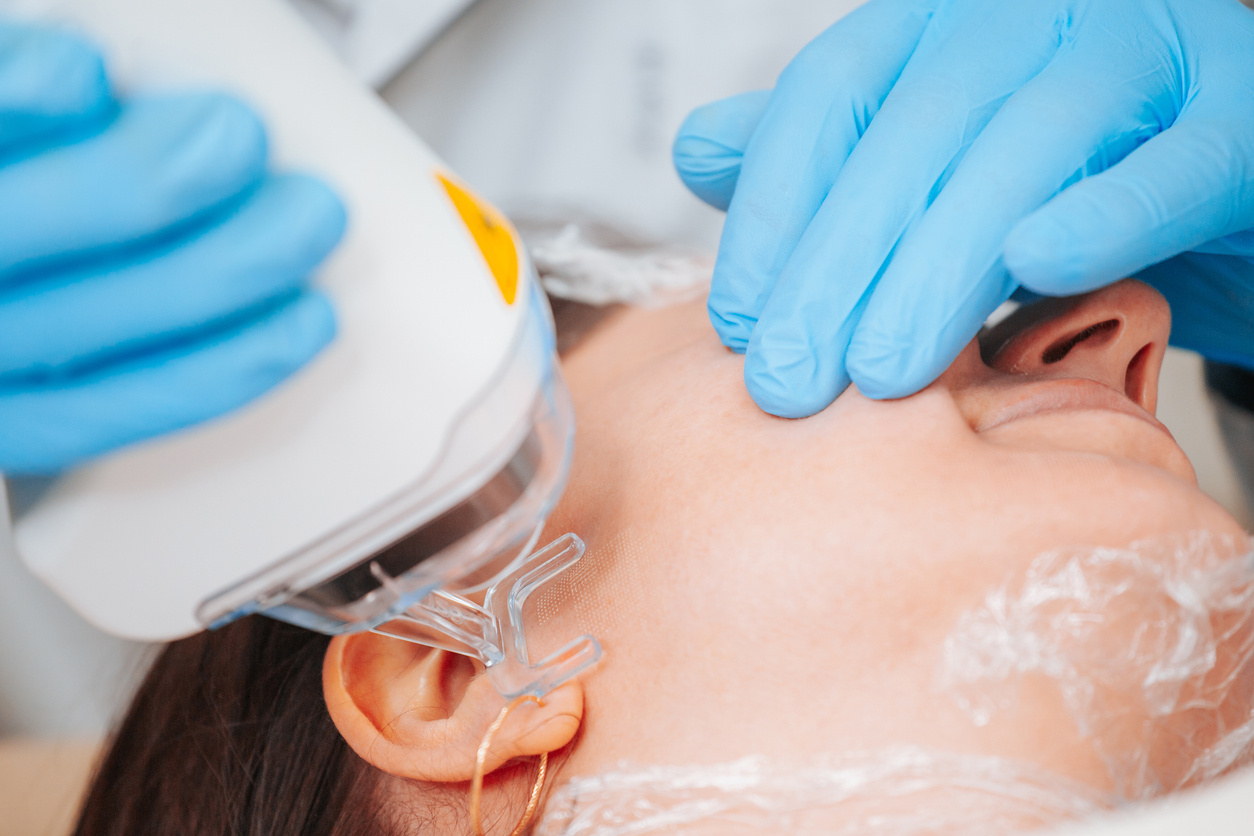
Ablative laser treatments, which penetrate more deeply, actually cause a wound, since they remove a layer of skin. Since ablative resurfacing actually vaporizes a layer of the skin, it provides more dramatic results and requires fewer sessions, but also requires a longer period of healing.
Non-Ablative Resurfacing
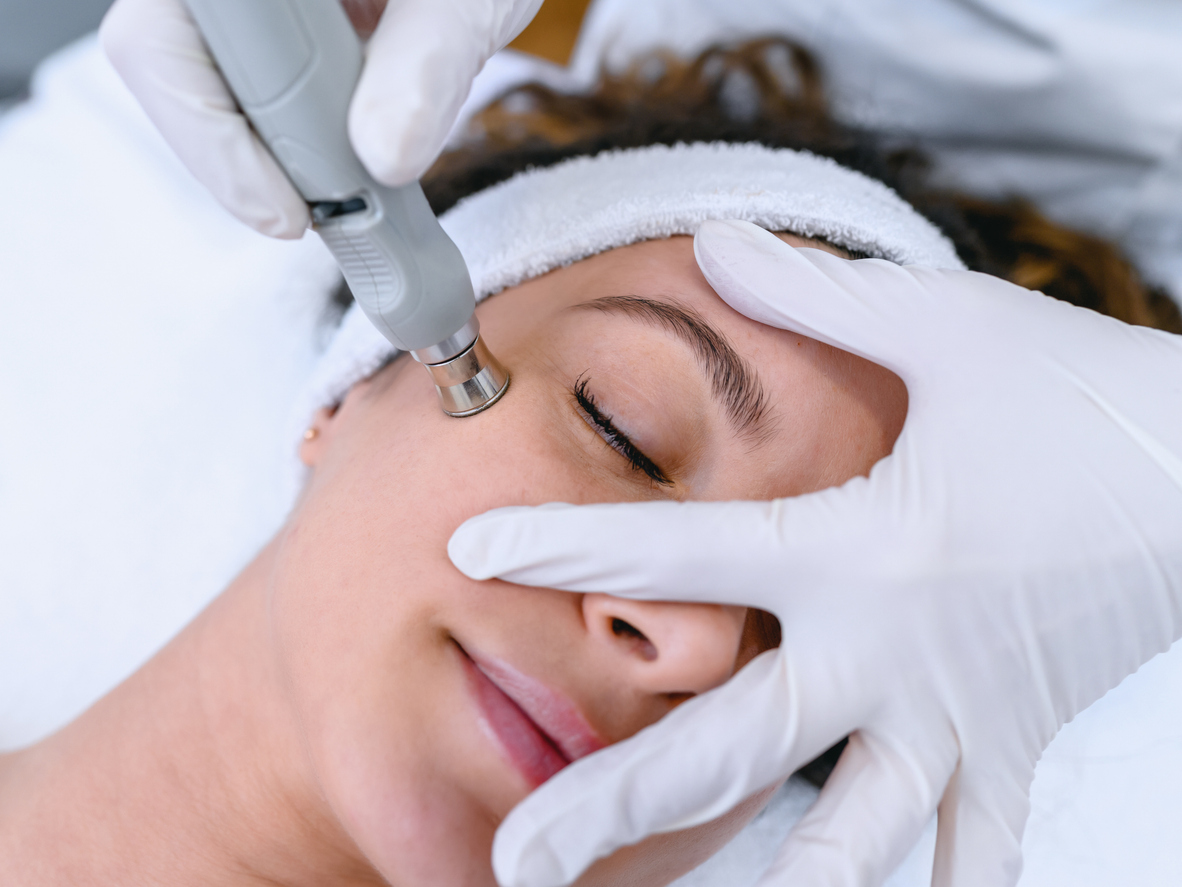
Non-ablative treatments do not burn away skin tissue, but use laser energy to stimulate collagen growth and tighten underlying skin. Non-ablative resurfacing is gentler than ablative and requires less downtime, but may necessitate more treatment sessions and may yield less dramatic results.

What is the Laser Resurfacing
Experience Like?
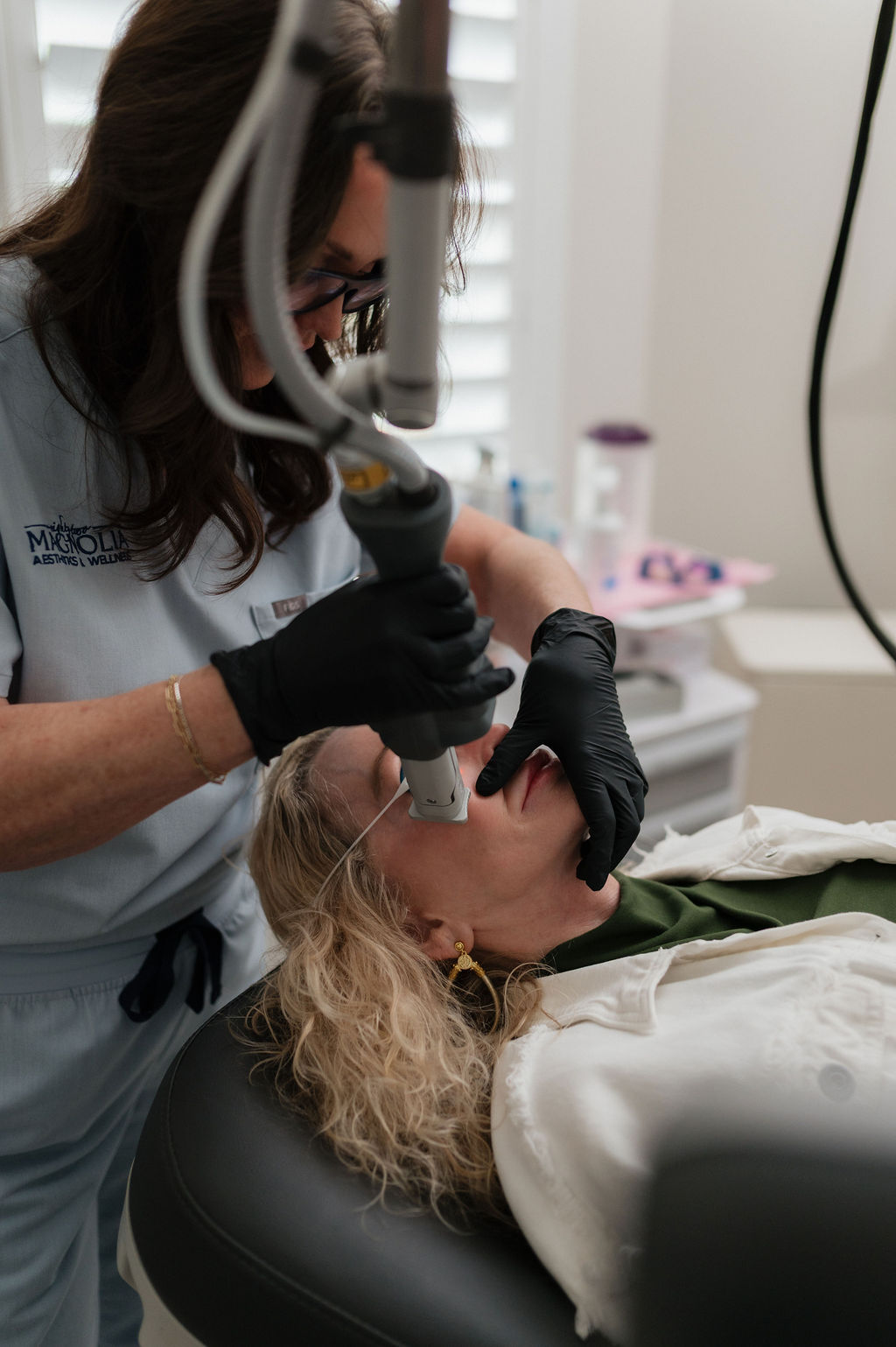
Laser treatments for skin conditions are typically performed in-office with topical anesthesia for comfort. Sessions typically take between 30 and 90 minutes to perform, depending on the size and location of the treated area. Some patients see significant improvement after a single treatment, particularly with ablative procedures, while others benefit from a series of sessions spaced several weeks apart.
Recovery from laser resurfacing procedures varies according to the particular procedure undergone and the individual patient’s skin type. In all cases, protecting the treated skin from sun exposure is one of the most important steps in both the healing process and the long-term maintenance of your results.
What Patients Ask Most About Laser Resurfacing
Results from laser skin resurfacing are long-lasting, but longevity depends on the type of treatment, the concern being addressed, and how well the skin is maintained afterward.
Sun exposure is the single greatest threat to resurfacing results, as UV damage continues to break down collagen and create new pigmentation changes after treatment. Patients who invest in daily SPF, a medical-grade skincare routine, and consistent sun protection tend to maintain their results significantly longer than those who return to unprotected sun exposure.
Although laser skin treatment is considered safe for most patients and is typically performed with no long-term complications, there are certain risks associated with any type of medical procedure.
While considered rare, risks may include:
- Infection
- Scarring
- Redness
- Pigmentation changes
- Acne
- Milia (tiny white bumps on the skin)
Thanks to our professional training and experience with these devices, the possibility of these risks is extremely low. During your assessment, we will discuss potential outcomes and any concerns you may have.
The safety and appropriateness of laser resurfacing varies significantly depending on skin tone and the type of resurfacing being considered. Here is a general overview:
- Non-ablative treatments are generally safer for a wider range of skin tones than ablative options
- Ablative resurfacing carries a higher risk of pigmentation changes in patients with deeper skin tones
- Fractional resurfacing offers a safer middle ground for patients with moderate skin tones who want more significant correction
- LaseMD Ultra is a non-ablative platform with a strong safety profile across a broad range of skin types
- Your provider will assess your Fitzpatrick skin type carefully during your consultation before recommending any resurfacing approach
If you have concerns about how your skin tone affects your candidacy for resurfacing, bring them to your consultation, and your provider will give you a straightforward assessment of your options.
Yes, and laser resurfacing is one of the most effective treatment options available for acne scarring, particularly for the depressed, atrophic scars that form when the skin loses collagen during the healing process.
Ablative and fractional ablative treatments work by removing the damaged tissue around the scar and stimulating the production of new collagen as the skin heals, gradually filling in depressions and improving surface texture.
Your provider will assess your scarring type, depth, and distribution during your consultation and recommend the resurfacing approach most likely to produce the best outcome for your specific skin.
After treatment, patients may experience redness and peeling at the treated site as the skin heals. The duration of these side effects varies, but is commonly several days. Ice packs may ease discomfort and improve appearance. Normal activities can be resumed during healing, and makeup may be applied to camouflage any unwanted evidence of treatment.
After ablative laser resurfacing, the treated skin will temporarily be raw, swollen and itchy, and emit discharge. Ice packs and over-the-counter pain relievers may be recommended for symptom relief. To help avoid scarring, patients are instructed not to pick at crusts or pieces of skin.
Visible healing may take a week or two, and some patients may prefer to remain at home until healing is well underway. Once new skin covers the treated area, cosmetics may be applied to conceal any residual redness, which may persist for a few months. When healing is complete, the skin’s appearance will be dramatically improved in tone, texture, and tightness.
A form of ablative resurfacing known as fractional ablative laser is now increasingly in use. This procedure targets more specific regions so that laser microbeams pinpoint and peel away smaller areas of skin.
During fractional laser surfacing, no visible wounds are caused, so although results are more noticeable, less downtime is necessary than after conventional ablative treatments. For some individuals, fractional ablative laser resurfacing represents the best of both worlds.