
Love the Skin You’re In
PRP Hair Restoration Treatment in Milton, FL
A non-surgical approach to hair loss that works with your biology.Hair loss is gradual, which means it is easy to dismiss until it becomes impossible to ignore. Thinning at the crown, a widening part, a hairline that keeps shifting back—these changes are common, and they affect far more people than openly talk about it. PRP hair restoration at 82 Magnolia offers a clinically supported, non-surgical option for patients who want to address the root cause rather than mask the result.
By concentrating the growth factors already present in your blood and delivering them directly to the scalp, PRP stimulates dormant hair follicles, improves blood supply to the scalp, and encourages the hair growth cycle to become more active.
No synthetic drugs, no surgery, no extended recovery. Just your body’s own healing capacity, redirected toward your scalp.
Who Is PRP Hair Restoration For?
Platelet-rich plasma (PRP) therapy is a well-suited option for a broad range of patients experiencing hair thinning or loss. It works best when follicles are still present and partially active, which is why earlier treatment tends to produce stronger outcomes. Patients who commonly benefit include:
The Science Behind PRP Hair Restoration Treatment
The process begins with a simple blood draw from your arm. Your blood is then placed in a centrifuge, which spins at a high speed to separate its components. This isolates the platelet-rich plasma from the red blood cells and other material, concentrating the platelets into a potent serum that contains significantly higher levels of growth factors than a standard blood sample.
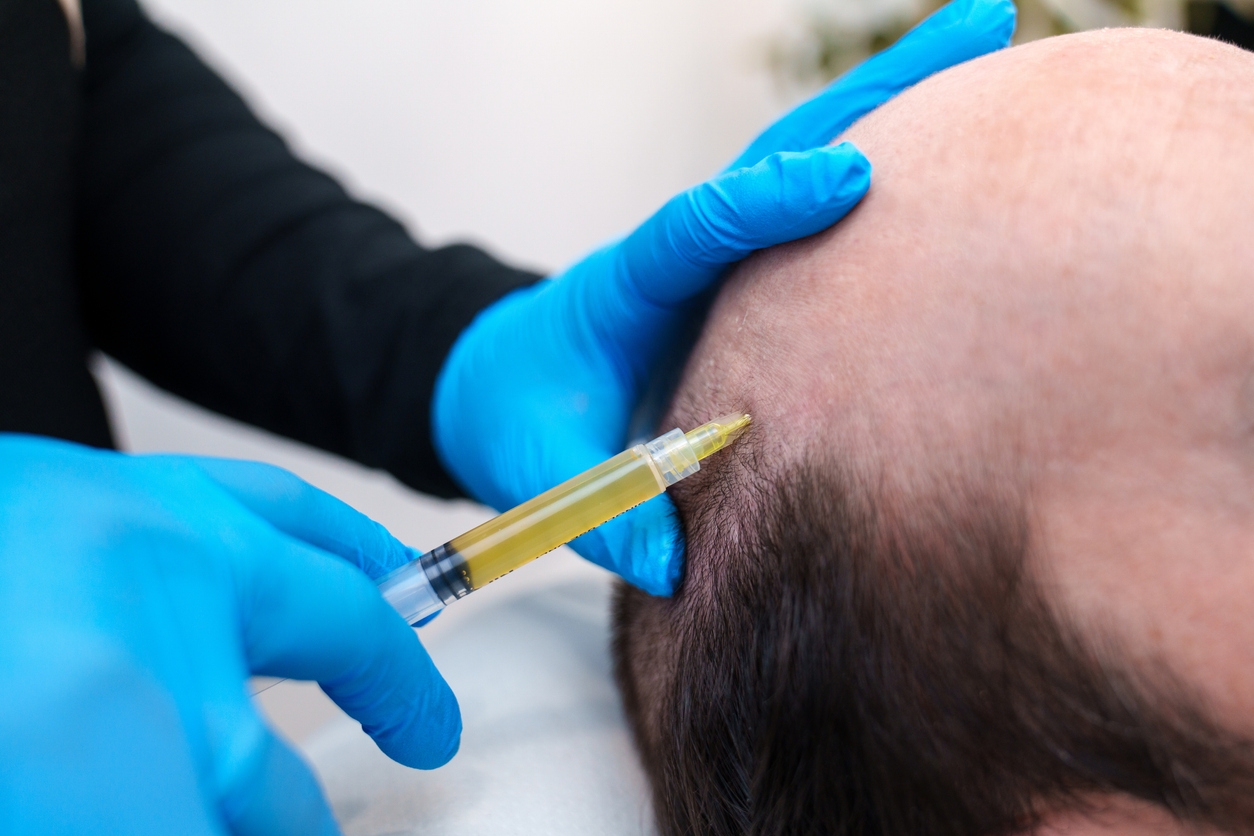
Those growth factors are what make PRP effective for hair restoration. When injected directly into the scalp at the level of the hair follicles, they stimulate cellular activity, improve circulation in the scalp tissue, and signal the follicles to shift from a dormant phase into an active growth phase. The proteins and growth factors within the plasma also support the production of new collagen and tissue around the follicle, creating a healthier environment for sustained hair growth over time.

What to Expect from Your Hair
Restoration Sessions
PRP hair restoration appointments are completed in-office and typically take between 45 and 60 minutes from blood draw to final injection. A topical numbing cream is applied to the scalp before treatment to keep you comfortable during the injection portion. Most patients find the process very manageable, and there is no surgery, no sedation, and no extended recovery involved.
We also offer LaseMD Ultra with Kerafactor, Plated Hair Serum, and hair supplements as add-on options for patients who want to take a more comprehensive approach to hair restoration. Your provider will discuss which combination makes the most sense for your hair loss pattern and your goals.
Frequently Asked Questions About PRP for Hair Loss
PRP has a growing and credible body of clinical research supporting its use for hair restoration, particularly for androgenic alopecia, which is the most common cause of hair thinning in both men and women. Studies have demonstrated improvements in hair density, follicle diameter, and the ratio of hairs in the active growth phase following a series of PRP treatments.
Results vary by patient and depend on factors including the degree of hair loss, how long thinning has been occurring, and individual biology. PRP works best for patients who still have active follicles present, which is why beginning treatment earlier in the hair loss process tends to produce more significant outcomes.
Most patients start with an initial treatment series before transitioning to a maintenance schedule. Here is what that typically looks like:
- An initial series of three to four sessions spaced four to six weeks apart
- A follow-up assessment to evaluate the hair growth response after the series is complete
- Maintenance treatments every four to six months to sustain results
- Some patients may benefit from additional sessions depending on the degree of hair loss
- Pairing PRP with complementary treatments like LaseMD Ultra with Kerafactor can reduce the number of sessions needed
Your provider will build a treatment plan based on your specific hair loss pattern and how your scalp responds after the first session.
PRP is considered a very safe treatment for hair restoration because it is derived entirely from your own blood. There are no synthetic drugs, foreign substances, or chemical additives involved, which means the risk of allergic reaction is extremely low.
The most common side effects are mild scalp tenderness, redness, and temporary swelling at the injection sites, all of which typically resolve within 24 to 48 hours. Some patients experience light bruising on the scalp, which also resolves quickly. Serious complications are rare.
PRP works by stimulating existing hair follicles, meaning the treatment is most effective when follicles are still present and at least partially active. In the early to moderate stages of hair loss, follicles are often dormant rather than gone, and PRP can be very effective at reactivating them and improving the overall hair growth environment.
In more advanced cases where follicles have been inactive for a long time or have fully miniaturized, the response to PRP may be more limited. This is one of the most important reasons to seek treatment sooner rather than later.
During your consultation, we will assess your hair loss pattern and give you an honest evaluation of what PRP is likely to achieve for you specifically, so you can make a fully informed decision about moving forward.
Most patients find PRP scalp injections very manageable, particularly with the numbing preparation we use before treatment. A topical numbing cream is applied to the scalp prior to the injection portion of the appointment, which significantly reduces discomfort.
The scalp can be a sensitive area, and some patients notice more sensation in certain zones than others, but the majority of patients tolerate the treatment well and do not find it prohibitive. Post-treatment tenderness on the scalp is common for a day or two and feels similar to mild soreness after a sunburn.