Love the Skin You’re In
Advanced Laser Tattoo Removal in Milton, FL
Leading laser technology that removes unwanted ink without removing what matters.Whether the ink no longer reflects who you are, or you want to make room for new artwork, laser tattoo removal has come a long way from the older, more aggressive methods of the past. Today’s laser technology offers faster, more comfortable pigment removal with minimal damage to the surrounding tissue.
At 82 Magnolia, we offer laser tattoo removal using the PicoSure Pro and the Alma Harmony XL Pro, two of the most advanced platforms available for ink clearance today. During your consultation, your provider will assess your tattoo, your skin tone, and the ink colors involved to determine the most appropriate device and treatment plan.
What Types of Tattoos Can Be Removed?
Laser tattoo removal works on a wide range of tattoos, though results vary based on several factors, including ink color, tattoo age, ink depth, and skin tone. We commonly treat:
Why the Right Laser Makes All the Difference
Older tattoo removal lasers worked by delivering heat to ink particles to break them down, a process that was effective but came with a higher risk of skin damage, longer recovery, and more sessions needed to achieve clearance.
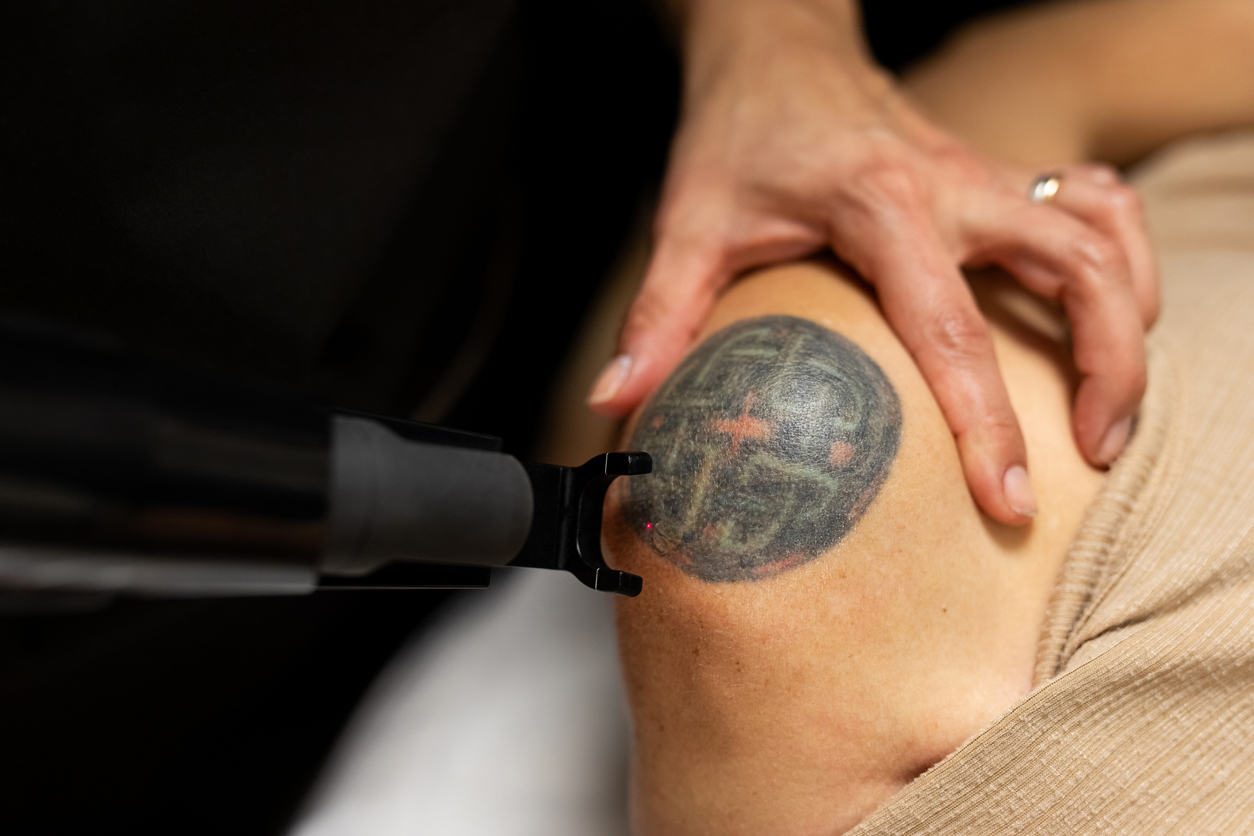
The PicoSure Pro delivers energy in a trillionth of a second and targets ink particles rather than relying primarily on heat. The result is more complete ink clearance, fewer sessions, and a safer experience for a broader range of skin tones. The PicoSure Pro is particularly effective for stubborn ink colors, including blues, greens, and purples that older lasers historically struggled to clear.
The Alma Harmony XL Pro adds additional wavelength options to our tattoo removal capabilities, allowing your provider to target specific ink colors that respond best to different wavelengths.
Having access to both platforms means we are not limited to a single approach, which is a meaningful advantage when treating complex, multicolored, or previously treated tattoos.

What to Expect from Your Laser Tattoo Removal Appointment
Laser tattoo removal sessions are relatively quick, typically lasting only a few minutes for smaller tattoos and slightly longer for larger or more complex pieces.
Before treatment, a topical anesthetic is applied to the skin to minimize discomfort, and protective eyewear is provided throughout the procedure. Your provider will test the skin’s response to the laser before beginning the full treatment to confirm the appropriate settings for your ink and skin type.
During the procedure, the laser delivers rapid pulses of energy to the tattooed area. Most patients describe the sensation as similar to a rubber band snapping against the skin. A cooling system may be used before, during, and after the session to help manage discomfort.
After each session, the treated area is iced and a topical antibiotic and bandage are applied. Mild swelling, redness, and blistering in the treated area are normal and expected as the skin responds to treatment.
Frequently Asked Questions About Laser Tattoo Removal
The number of sessions depends on several factors specific to your tattoo and your skin. Here is a general guide:
- Simple single-color tattoos may clear in four to six sessions
- Complex, multicolored, or heavily saturated tattoos can require ten or more sessions
- Amateur tattoos often respond faster than professional tattoos due to shallower ink placement
- Older, faded tattoos typically require fewer sessions than newer, more vibrant ones
- Previously treated tattoos may require additional sessions, depending on how the skin has responded
- Ink colors like black and dark blue clear most reliably, while greens and yellows can take longer. Your provider will give you a realistic session estimate at your consultation based on a thorough assessment of your specific tattoo.
Laser tattoo removal is a safe and well-established procedure when performed by a trained medical provider using the appropriate device and settings for your skin. The PicoSure Pro’s picosecond technology has a strong safety profile and is associated with a lower risk of adverse effects than older laser systems.
Following your provider’s aftercare instructions carefully is one of the most important things you can do to avoid negative results and protect your skin throughout the process.
Most patients describe the sensation as similar to a rubber band snapping against the skin repeatedly, which is manageable for the majority of people. Here is what we do to keep you comfortable throughout the process:
- A topical anesthetic is applied to the skin before treatment begins
- A cooling system may be used before, during, and after the session
- Each session lasts only a few minutes, limiting total exposure time
- The treated area is iced after each session to soothe the skin
- Over-the-counter pain relief taken before your appointment can help reduce discomfort further
Pain tolerance varies by patient and by location on the body, with areas closer to bone or with thinner skin typically feeling more sensitive than areas with more tissue underneath.
Yes, and tattoo lightening for cover-up preparation is one of the most common reasons patients come to us for laser removal. A full removal is not always the goal. In many cases, lightening a tattoo by fifty to seventy percent gives a tattoo artist significantly more creative flexibility and produces a better cover-up result than working directly over a dark, saturated piece.
Fewer sessions are needed for lightening than for complete removal, which also means a lower overall investment of time and cost. If your goal is a cover-up rather than full clearance, let your provider know at your consultation so we can calibrate the treatment plan and session spacing accordingly. We are happy to work with your timeline and your artist’s recommendations.
Spacing sessions appropriately is just as important as the treatment itself. Sessions are typically spaced six to eight weeks apart to allow the skin to heal fully between treatments.
Scheduling sessions too close together does not accelerate results and increases the risk of skin damage. Your provider will assess your skin’s healing progress at each appointment before proceeding with the next session.